Conflict of Interest
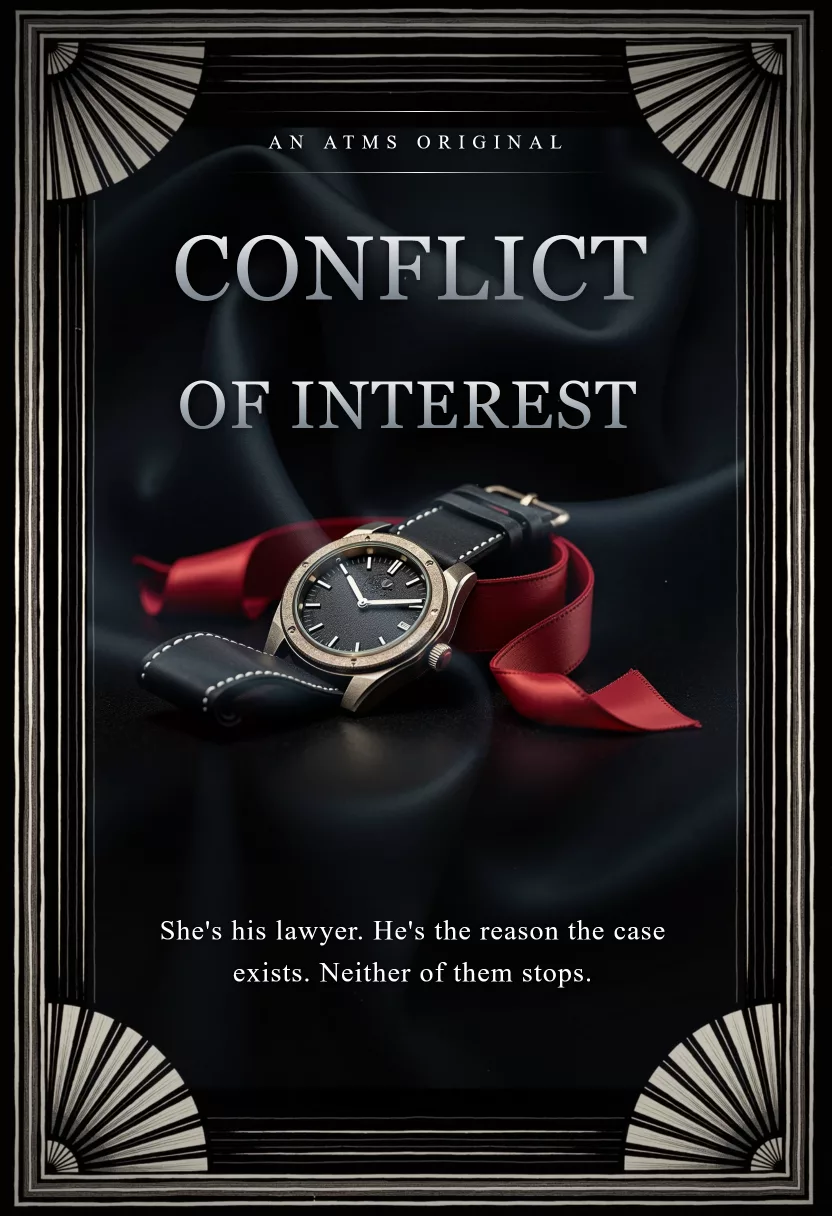
The file landed on Frankie Walsh's desk at 6:40 on a Thursday, which told her two things before she opened it. That it was a mess, and that Hal had run out of other people to hand it to.
He came in without sitting, which meant he wasn't going to argue. "Settlement that won't settle. Two mediated sessions, trial if it doesn't fold. You eat these for breakfast."
"I eat custody fights and contested wills for breakfast. This is commercial." She turned the cover sheet. Brennan v. Russo, et al. "Gambling. A civil RICO count. Why me and not Reyes?"
"Reyes is in Albany till the nineteenth, Delgado's buried in the pension thing, and you're the one in this building who doesn't sleep." He set his coffee on her blotter, which she'd have taken someone's hand off for, and she let it slide, because he looked like he hadn't slept since spring and because she was thirty-five and still the youngest name they had ever put on a matter this size. You bank that kind of trust. "City councilman is suing a family of building contractors. Claims they run an unlicensed book out of the back of their social club, claims he got taken for forty thousand. He wants damages, an injunction, and the front page." He drank. "Their name's Russo. Father, three sons. You'll know the name."
She did. Everyone did, the way you know weather.
But she went home and pulled the threads anyway, because a defense lawyer who walks into a room not knowing what the room already believes is a fool, and what the room believed about the Russos was a low, durable hum she'd heard her whole life without once examining. So she examined it. The framing subcontractor who'd lowballed a Russo bid in '09 and had a scaffolding accident before the footings were poured. The building inspector who'd flagged a Russo job and then transferred to Staten Island and then, a year on, to a lake house he shouldn't have been able to carry. The permits that sailed where other firms' stalled. The club on Court Street where certain men were photographed going in and never quite explained coming out. None of it proven. None of it even charged. Just a sediment of story that had settled over forty years until the name itself carried weight, and a jury, she could see this part already, would walk in pre-loaded, would look at four men named Russo and a councilman with a flag pin and write the ending in the hallway before openings. The reputation would do the plaintiff's whole job for him. He didn't need to prove the book. He needed only to stand near the word Russo and let it ring like a struck glass.
Which meant her defense couldn't really be about the gambling at all. Her one road to a verdict ran through making the jury distrust the plaintiff more than they distrusted her own client.
And then there was the part she didn't write down, because it wasn't the kind of thing you put on a pad. The forty thousand was a hole. A careful man with twenty unscratched years in office did not lose that much he couldn't account for and then drag the people he'd lost it to into open court, where his own bank records became fair game, unless the noise was somehow cheaper than the quiet. Brennan was not careless. So the lawsuit was not really about the money. It was about whatever the money pointed at.
She capped the pen at eleven, rinsed her glass, and went to bed at her usual time. She did not let herself think about why a careful man pays full freight to be publicly humiliated. Except the way you don't think about a stone in your shoe until you've walked a while on it.
The conference room was twenty-two floors over Water Street and cold enough to keep a body honest, and the plaintiff came in eleven minutes late in a way that was clearly meant to be read.
Frankie took her measure of the other side while the mediator, a tired courtly man named Pearson, did his throat-clearing about process and good faith.
Sal Russo sat dead center, hands folded, a big still man gone gray, eyes that moved once around the table and then settled and didn't move again. The calm of a man who'd sat in worse rooms and outlasted them. To his left the middle son, Nico, easy and handsome, already half-smiling at Pearson as though they'd be friends by lunch. To his right the youngest, Tommy, mid-twenties, who couldn't keep his foot still. And on the far end, set a little apart, arms crossed, the eldest. Marco. The only one who looked like he resented the chair. Dust dried into a shirt cuff that had otherwise been buttoned with care; a watch with a hairline crack across the face; the build of a man who came off scaffolding, not a machine. He looked at the councilman the way you look at a pothole that's blown a tire, and when his eyes came to her, the one person in the room theoretically on his side, they didn't warm a degree.
It did not stay calm.
"My client will establish," Vossler said, before Pearson had finished, "a pattern of criminal enterprise this body cannot ignore and a jury will not forgive. These men ran a book. They took forty thousand dollars from a sitting member of the City Council through —"
"Your client lost forty thousand dollars," Frankie said. "Different verb. Also the only one he's pled."
"Counsel will let me finish."
"Counsel will, when you say a true thing." She didn't raise her voice. "He pled the amount of his loss to establish his damages. Paragraph nineteen, his words. So let's not perform that we're here about a principle. Your theory is that everyone already knows what my clients are, and you'd like a courtroom to do the knowing out loud and call it a verdict. That isn't a case. It's a mood with a docket number."
"That is a slander of a public servant, on the record—"
"He sued first. You can't drag a family into open court and then bill them for looking back at you."
Vossler's voice climbed. Pearson said gentlemen, then counsel, then let's keep it civil, and into the small silence that bought, Brennan spoke for the first time, mild and wounded and beautifully reasonable, a man who'd practiced reasonable in front of cameras for twenty years.
"I'd have preferred to handle this privately, Ms. Walsh. But there's a limit to how long a man lets himself be —"
"Be what," Frankie said. "You haven't named the harm. You've named a number. So walk me through it. How does a councilman come to be down forty thousand dollars to a contracting firm? Not the loss. The mechanism. What was the transaction."
Brennan's jaw did something small and tight at the corner.
There and gone. The flag pin caught the light and he was a wronged citizen again, upright and patient. But she'd seen it, the flicker of a man reminded there was a thing in the room he'd rather had stayed outside it, and she filed it the way you mark a hairline crack in a green slab to come back to, dated, that. And so, she registered, eight feet down the table, had the eldest Russo son. Marco's eyes had cut to her on the word mechanism, fast, almost approving, before he caught himself and went flat again.
She didn't push it. She filed it and moved to the dull machinery, the schedule and the protective order and the document requests, and handled it, and took ground, and gave back nothing. Vossler tried twice more to get heat into the room and twice more she let it cool around him, which is its own kind of winning. When it broke, Brennan and Vossler left first, loudly. Sal stood, buttoned his coat, laid a hand briefly on the back of Frankie's chair on his way past.
"You'll do," he said, which from him was close to a blessing, and went out, Nico steering, Tommy talking too fast.
Marco was last. "Paragraph nineteen," he said at the door.
"He told us himself. Angry men do. They hand you the exact thing they should be hiding and call it a grievance." She slid the binder into the box. "You caught it too. The flinch, when I asked him the mechanism. You were the only one at that table watching him instead of me." She met his eyes. "Makes me wonder what you know that he's afraid I'll find."
"Huh," he said, and stood there a second longer than there was reason to, and left.